Soil conservation for climate-resilient agriculture in Mali
More resilient rainfed family farming is intended to strengthen rural livelihoods in Mali. Rural households, women and young people are expected to benefit from better prospects for food and nutritional security, employment and entrepreneurship.
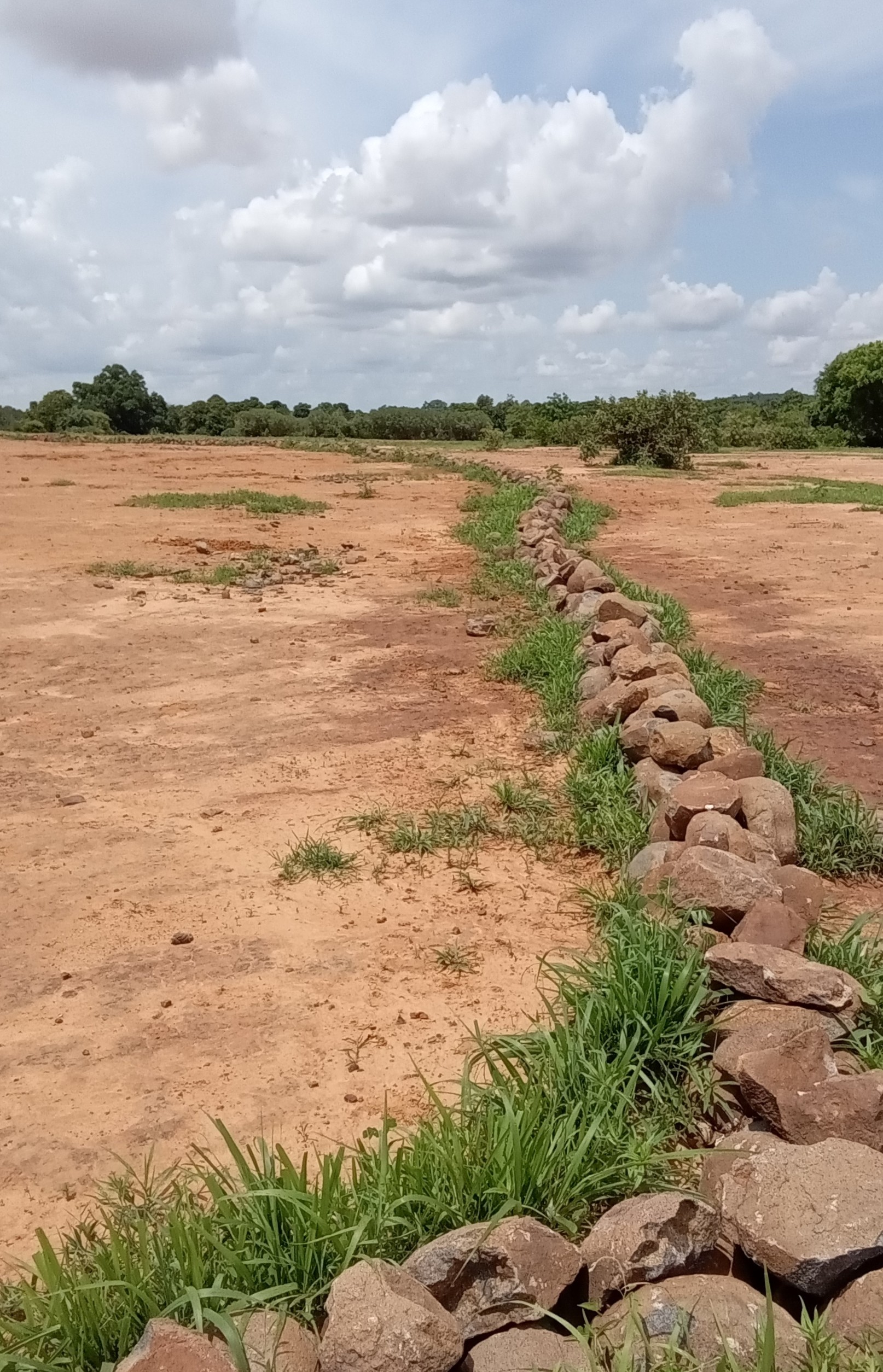
Climate change is increasing pressure on rainfed agriculture. Soil degradation, declining fertility, unbalanced water use and dependence on mineral inputs constrain the long-term use of agricultural land.
For the Promotion of Agro-Ecological Cropping Systems and Soil Protection programme (PAESOL), Dorsch Impact GmbH provides programme management, baseline diagnostics and integrated planning. The team supports participatory multi-annual agro-ecological development plans, establishes knowledge transfer systems and supports investments in soil and water conservation. It also strengthens the Direction Nationale de l’Agriculture (DNA) in environmental and social risk management, monitoring and evaluation.
Areas of Expertise
- Environment & Society
- Water Resource Management
- Sustainable Agriculture
- Natural Resource Management
Companies
Dorsch Impact GmbH
Client
National Directorate of Agriculture (DNA), Ministry of Rural Development, financed by KfW
Duration
From 2022 to 2027
Location
Mali, Mali
Project Activities
Dorsch Impact supports PAESOL through the following services:
- Programme management and a preparatory diagnostic study to establish the baseline
- Strategy development and integrated planning, including participatory multi-annual agro-ecological development plans, their integration into municipal Economic, Social and Cultural Development Plans (PDESC), and advice to DNA on disseminating good agricultural practices
- Establishment of knowledge transfer systems, including training programmes and local intermediary teams
- Strengthening of local supply chains for seeds, biological inputs and agricultural equipment, alongside support for input shops and composting
- Support for investments in soil and water conservation, agroforestry and other agro-ecological measures
- Capacity development for DNA in environmental and social risk management, including ESMF, ESMP and SEF
- Monitoring and evaluation, including design of an RMMV system, experience capitalisation, communication and visibility, and management of the disposition fund
Impact
- Expected availability of coordinated strategies for agro-ecological farming and soil and water conservation
- Planned operational systems for knowledge transfer and dissemination of good agricultural practices
- Expected improvements in local supply chains for seeds, biological inputs and agricultural equipment
- Intended stabilisation, rehabilitation and protection of agricultural land through soil and water conservation and agroforestry
- Expected wider adoption of locally adapted agro-ecological practices
- Intended contribution to reducing rural poverty, improving food and nutritional security, and expanding employment and entrepreneurship opportunities for women and young people
Contributing to the UN Sustainable Development Goals
We are committed to making a positive impact and supporting the UN Sustainable Development Goals (SDGs). This project contributes to the following SDGs:
Companies